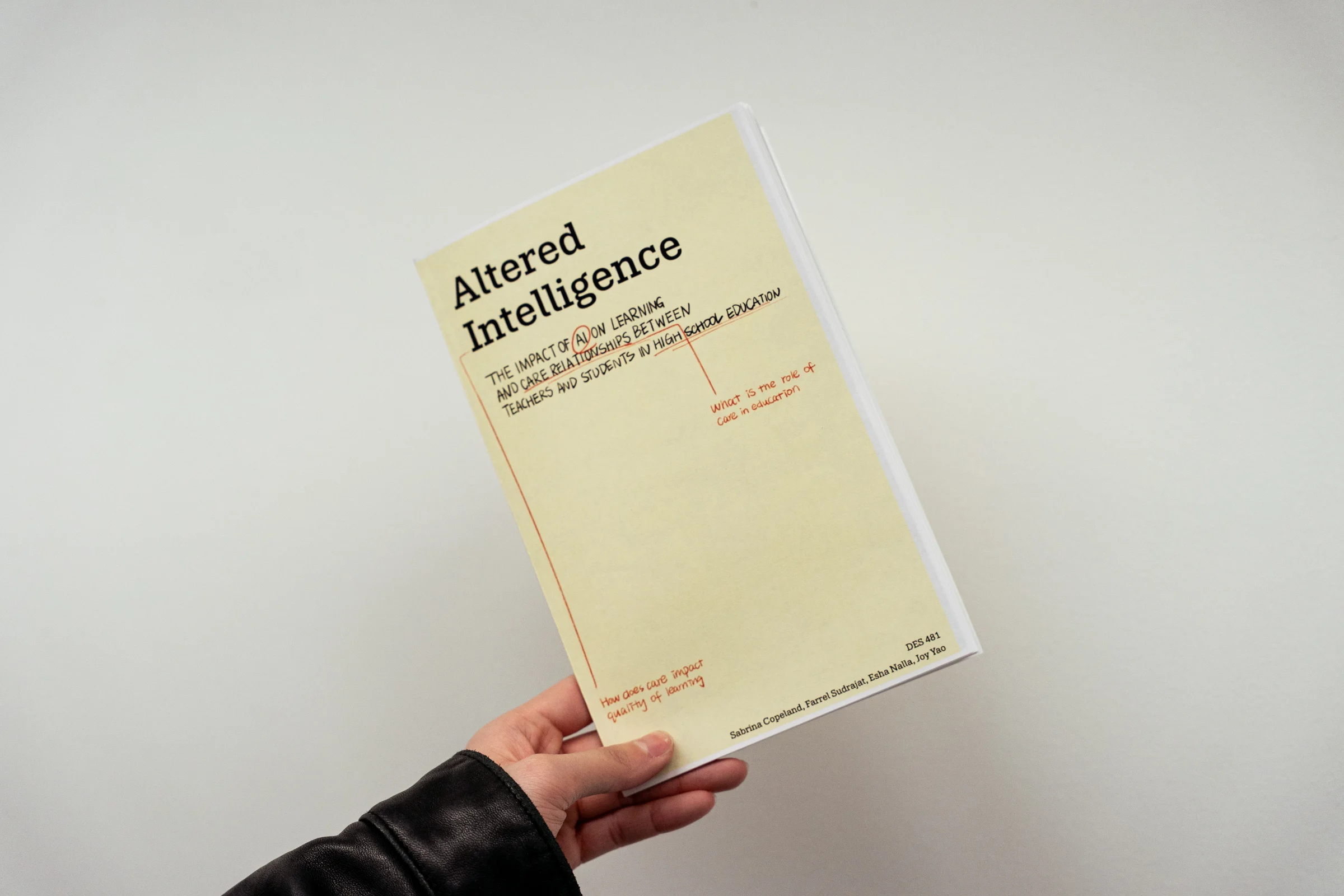
Altered Intelligence
2025
A research study on how AI is reshaping care between high-school students and their teachers.
Role
User Researcher
Research Synthesis
Workbook Design
Duration
10 Weeks
Methods
Diary Study
Interviews
Affinity Mapping
Team
Sabrina Copeland
Farrel Sudrajat
Joy Yao
Overview
AI is already in the classroom. We wanted to know what it's doing to care.
When given the prompt of “care relationships” with a focus on technology and people, my group immediately honed in on AI and its prevalence in the classroom. Our goal was to land on a research question, gather our research effectively and work together to understand the context we wanted to explore.
Narrowing our scope
We started with school as a whole, finding articles from all over the world on AI’s impact on care relationships from grades K–12. About halfway through, our professor encouraged us to narrow our scope, which led us to high-school students and teachers. None of us had AI when we were in high school, so we were deeply curious how it has changed education at that level.
Our narrowed search showed that AI has made both positive and negative impacts on care between high-school teachers and students, and our team grew excited to understand those differing viewpoints firsthand.
My Role
I focused on research synthesis and the workbook
I helped Sabrina keep the group organized and on track, and I was heavily involved in research: coding interviews and grouping insights to draw connections between them. I got sick about halfway through and had to step back for a bit, but jumped right back in once I recovered.
Organization — kept the project on track with Sabrina.
Synthesis — coded research and pulled out themes.
Sketches — refined concepts and drew storyboards.
Workbook — formatted and printed the final piece.
Research
A three-step protocol, designed to avoid bias
From the start, our first priority was making sure we didn't bring any bias or ask leading questions.
Screener survey — gave us a general sense of each participant's views and eligibility, sent with a recruitment email.
Diary study — participants shared their daily AI use, or just their thoughts and feelings on AI, with optional prompts to follow.
Interviews — questions built from each person's diary entries so we could fully expand on their views.
Throughout, we kept our questions as neutral as possible and flagged it for each other whenever one started to sound biased.
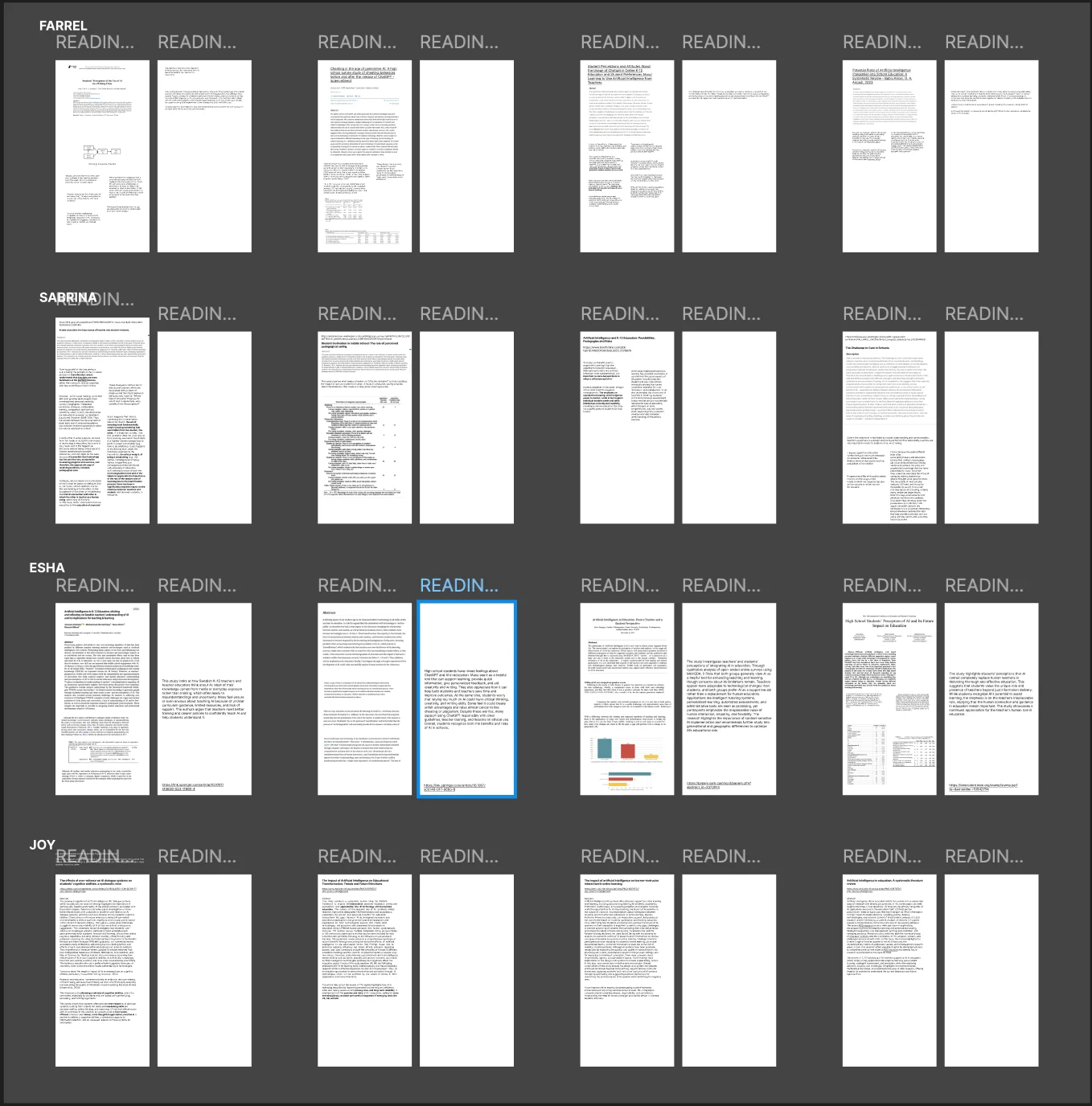
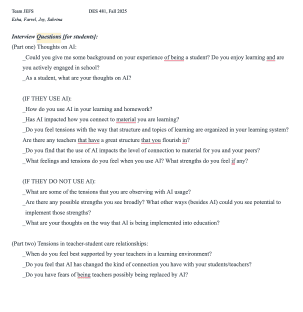
Research protocol and interview guide
Interviews across the country
We interviewed teachers and students of different ages and levels from all over the country. Each hour-long session included an interactive activity, and our protocol made follow-up questions feel seamless. The interviews often felt too short.
Some of what we heard surprised us. Students tend to regulate their own AI use, reaching for it only when they need it or when they see work as “not important.” Most teachers didn't agree with AI use, but they understood students' choices and focused on how it could be used for good.
Coding transcripts into themes
We coded each transcript and broke our findings into categories, which showed us which ideas kept overlapping and how they tied into our work.
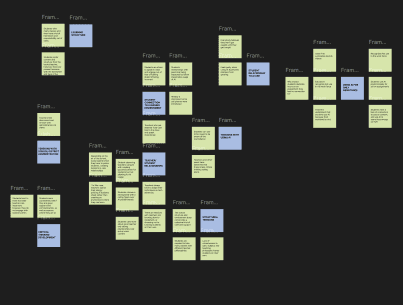
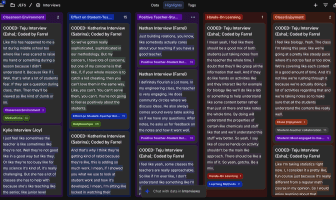
Affinity mapping and coded transcripts
Insights
Five key insights stood out
AI is always on
AI tools are readily available at convenient times, creating a general trend of over-reliance.
Students feel disconnected
Disconnect from the material and from peers reduces students' personal motivation to engage with school.
Enforcement over connection
With AI becoming more present, some teachers focus more on enforcement than connection, eroding trust and care on both sides.
Care is inconsistent
A lack of consistent care, due to class structure, undermines students' ability to connect to resources and support.
Two-way exchange helps
Teacher-student interactions built on democratic exchange help bridge the disconnect, increasing student motivation and teacher resonance.
From these insights, we finalized the defining question for the rest of our process:
“How does personalized learning through AI impact the care relationship between high school students and teachers?”
— Our research question
Ideation
20+ sketches, from dystopian to utopian
From our insights we created over twenty sketches, sorting them into dystopian, utopian and in-between. At first we zoomed in too quickly on certain insights instead of the fuller picture.
Finding a middle ground was our biggest struggle. Our ideas kept turning out “Disney villain-esque” when we wanted ideas people would actually stop and think about. More interviews and feedback helped us refine down to five concepts that fit our theme while still leaving gray areas open for discussion.
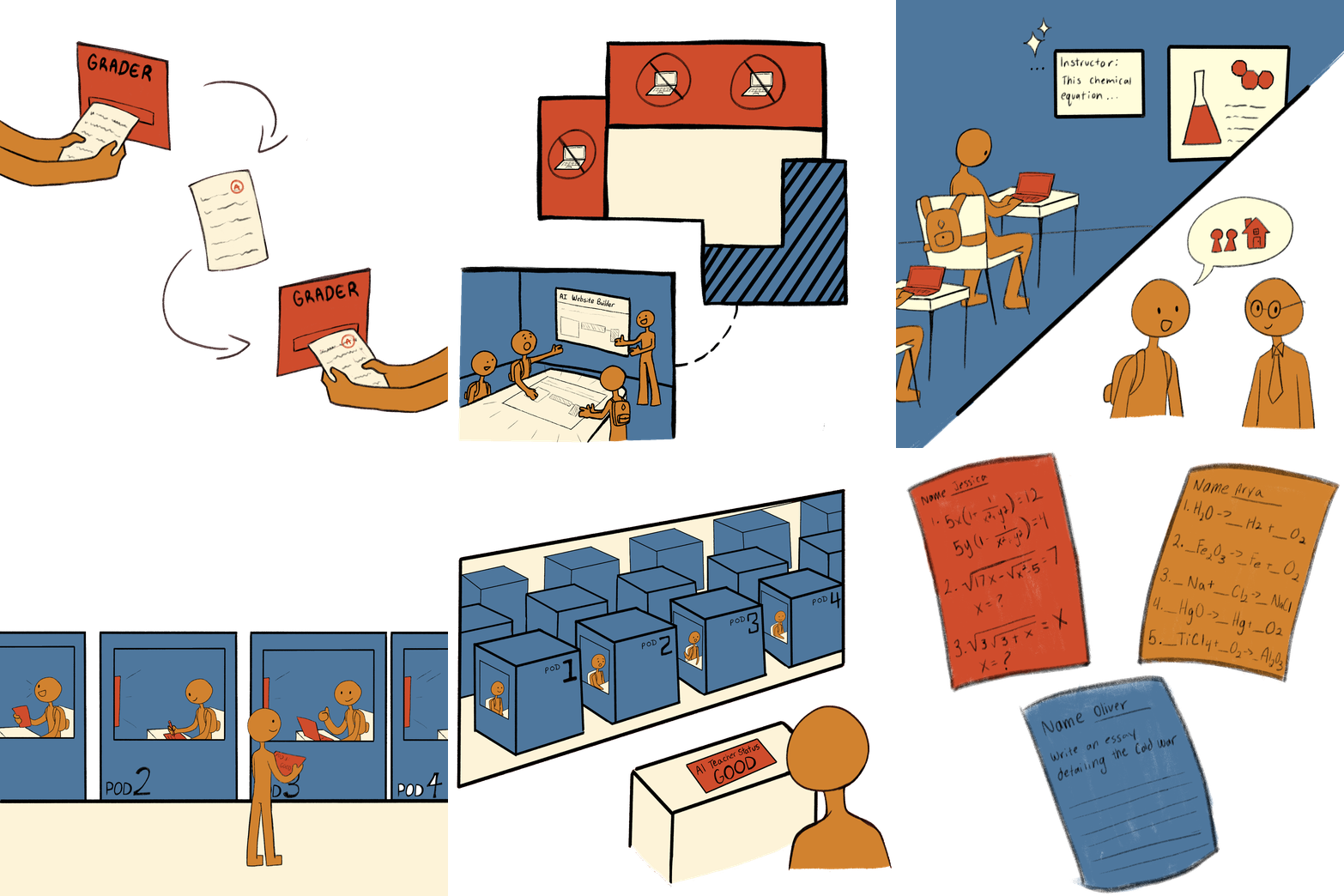
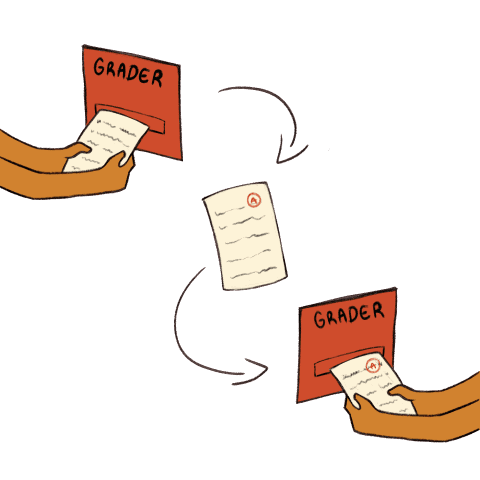
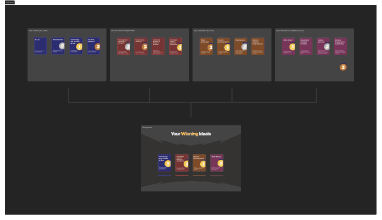
Storyboard, early sketch and our concept board
Workbook
We packaged our findings into a printed workbook
We wanted it to feel like a high-school notebook, using a sketchy style for our titles and to highlight our main points.
The color palette feels like school without tipping into something too childish for high schoolers. In the end, the workbook brings all of our research together in one place.
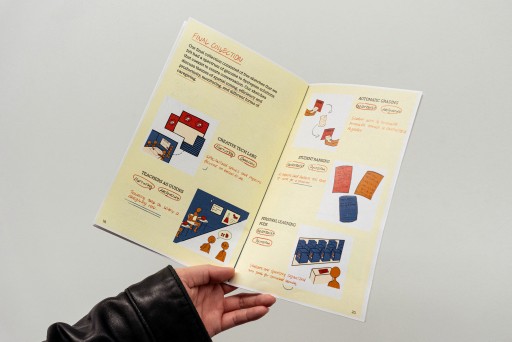
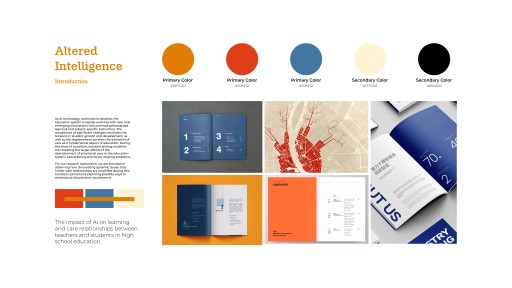

Printed spread, style guide and closing page
Reflection
Research was the most rewarding part
Research was the most critical part of this project, and for me it was also the most enjoyable. Getting to know each participant surfaced new perspectives, behaviors and motivations that made our project much richer than we expected.
It guided our work by highlighting key patterns and differences, and it helped us grow. Asking good questions and making sure people felt comfortable taught us to communicate better. We practiced active listening, stayed open to every possibility, and learned how vital empathy and curiosity are in any user-focused work.
Check out my other projects!