Reflection:
Reflection:
Redesigning Wikipedia to explore its potential provided valuable insights into changes in design and the advancements that AI can bring to an interface. Collaborating with my teammates was an educational experience; we all learned different skills and ideas from one another and worked diligently to envision how Wikipedia could look if updated with modern features.
Redesigning Wikipedia to explore its potential provided valuable insights into changes in design and the advancements that AI can bring to an interface. Collaborating with my teammates was an educational experience; we all learned different skills and ideas from one another and worked diligently to envision how Wikipedia could look if updated with modern features.
Finalizing Design
When finalizing our design, we worked to refine the smaller details, ensuring each screen was aligned properly, our key features and signature experiences were functional and created our video to showcase our redesign


Finalizing Design
When finalizing our design, we worked to refine the smaller details, ensuring each screen was aligned properly, our key features and signature experiences were functional and created our video to showcase our redesign
Wikipedia Redesign
Wikipedia, advanced

The Issue
Wikipedia is a beloved site used daily by millions; however, it has lagged behind other competitors who perform their tasks more quickly and efficiently. Our goal was to improve the Wikipedia app while preserving its iconic structure.
Our Proccess
Team: Leslie Kwok, Danella Lei, Esther Ko, Sydney Lai and Esha Nalla
Approach:
Approach:
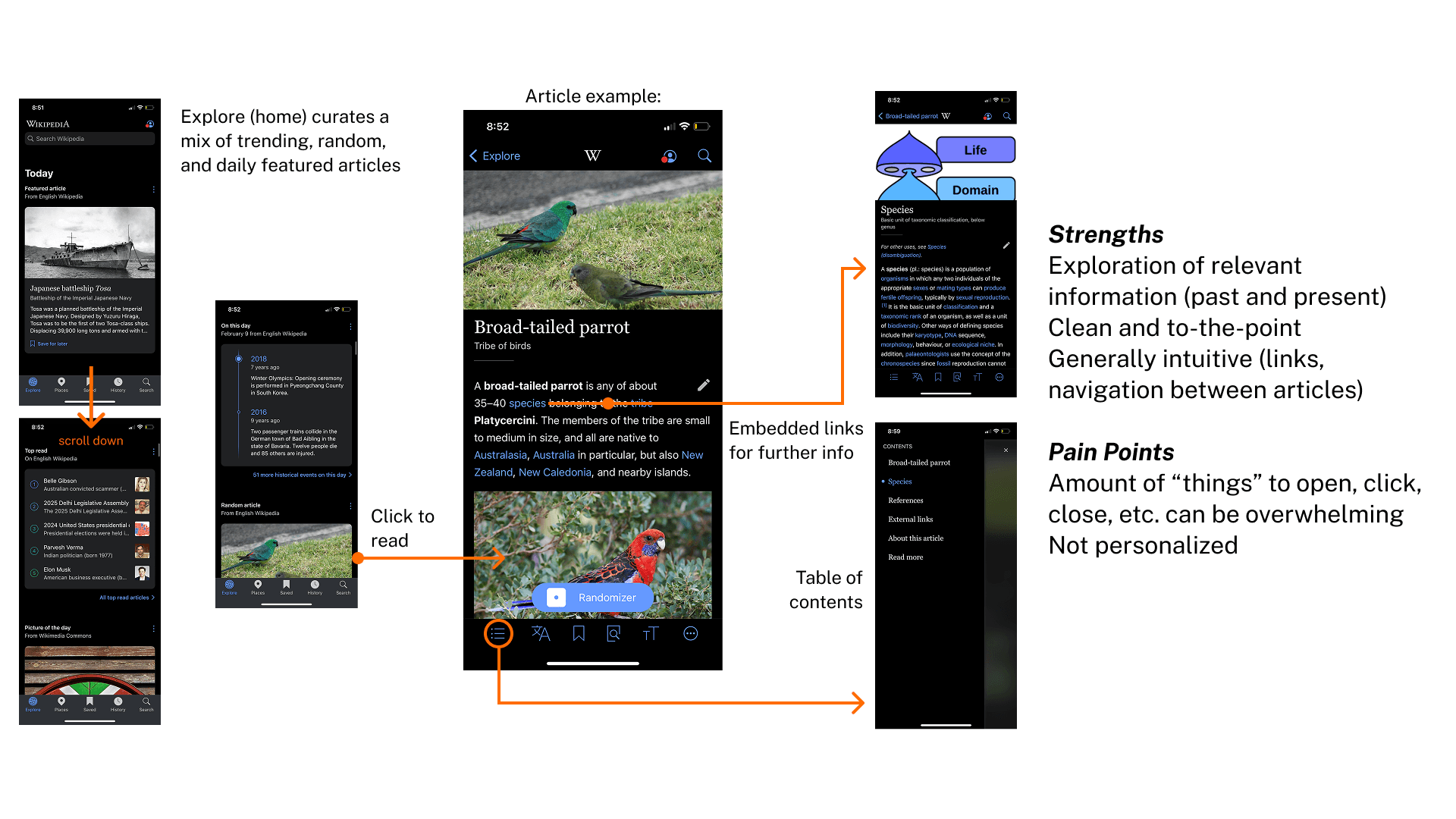
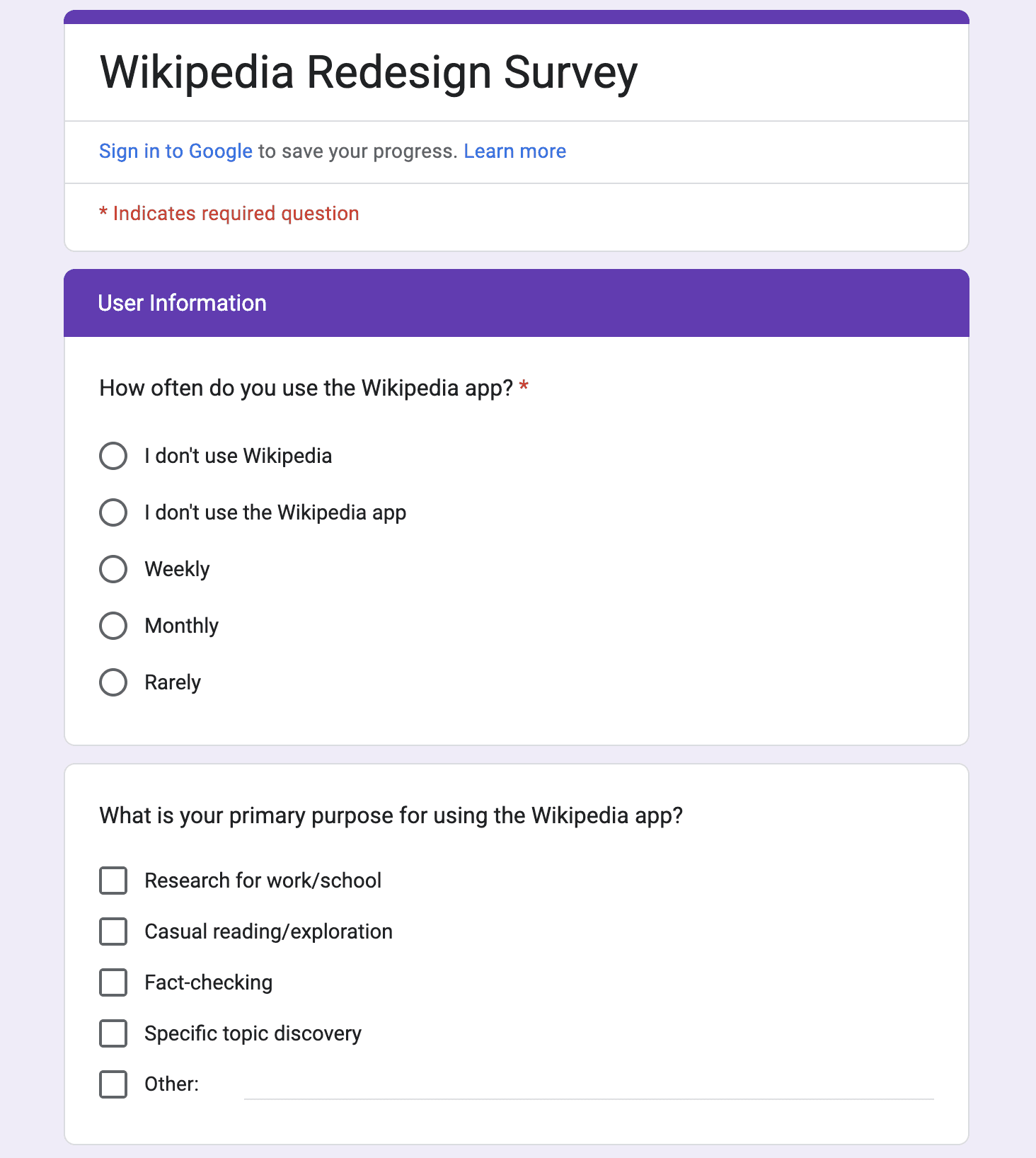
We first conducted an app teardown, examining each existing feature, mapping the flows and identifying pain points and strengths while also examining competing apps. We then worked to create a google form with about 20 questions to a wide range of people in order to properly gauge who would use the app, what they would use it for and what they would like to see.
We first conducted an app teardown, examining each existing feature, mapping the flows and identifying pain points and strengths while also examining competing apps. We then worked to create a google form with about 20 questions to a wide range of people in order to properly gauge who would use the app, what they would use it for and what they would like to see.
(I'd love to talk about what we learned!)
(I'd love to talk about what we learned!)
Insights
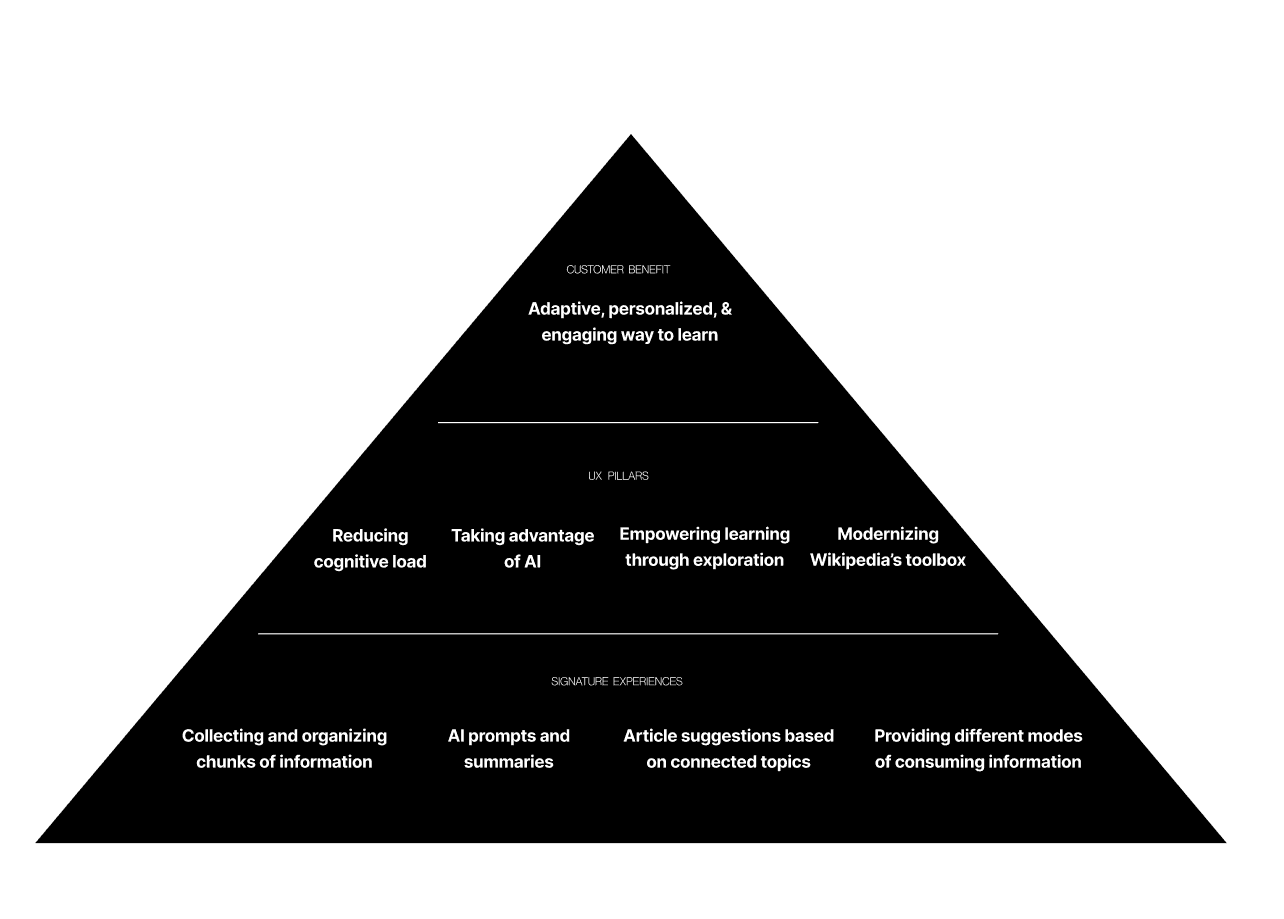
We compiled our findings, mapped key insights, and highlighted notable responses from the survey. This process led us to establish the core goals that our app needed to achieve, which in turn guided us to define our UX strategy pyramid and proceed into ideation.


Insights
We compiled our findings, mapped key insights, and highlighted notable responses from the survey. This process led us to establish the core goals that our app needed to achieve, which in turn guided us to define our UX strategy pyramid and proceed into ideation.
Finalizing Concept
Finalizing Concept
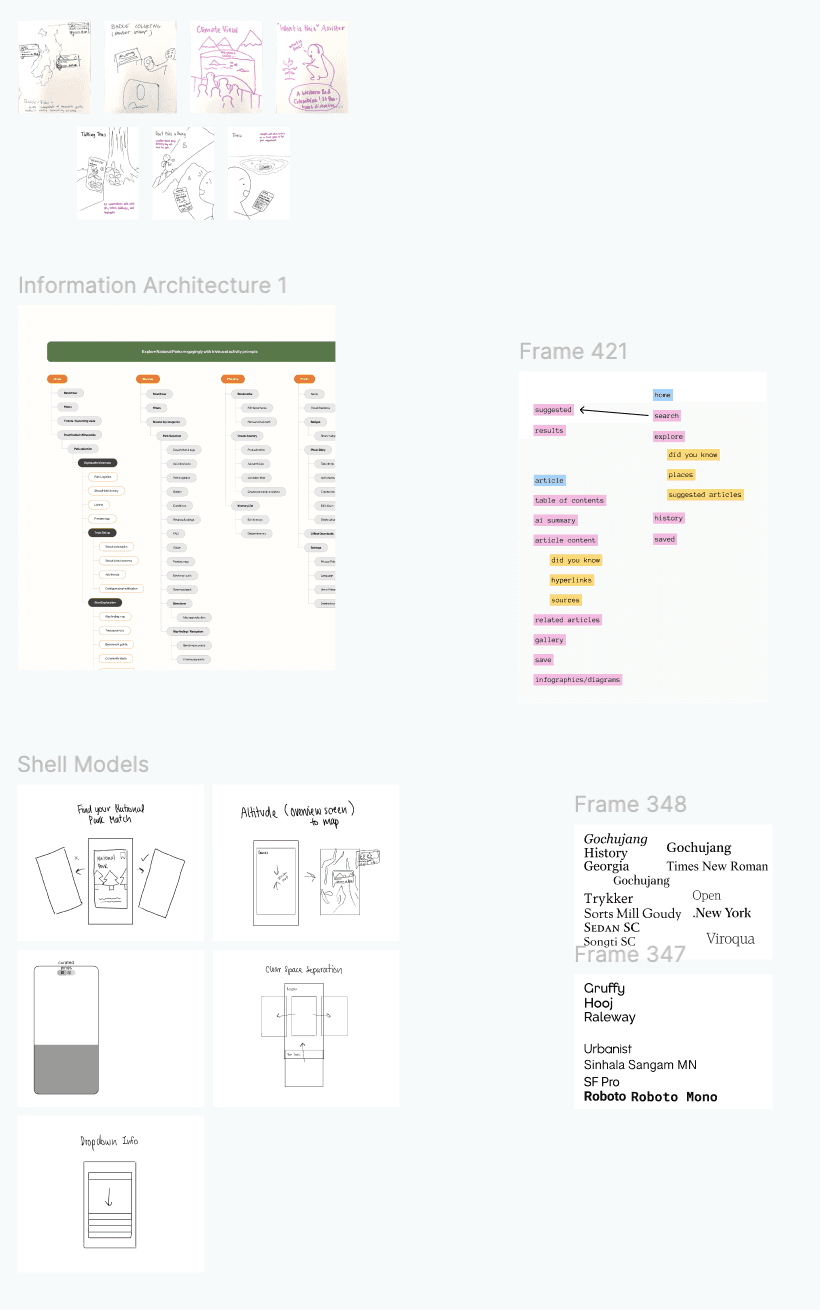
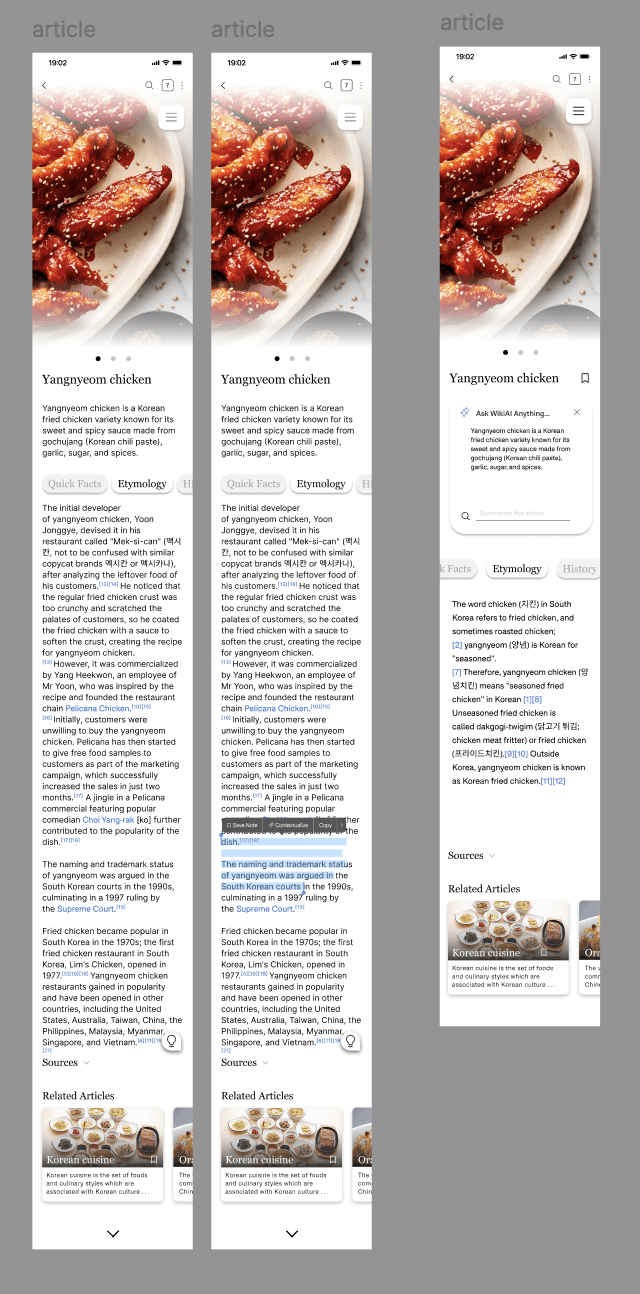
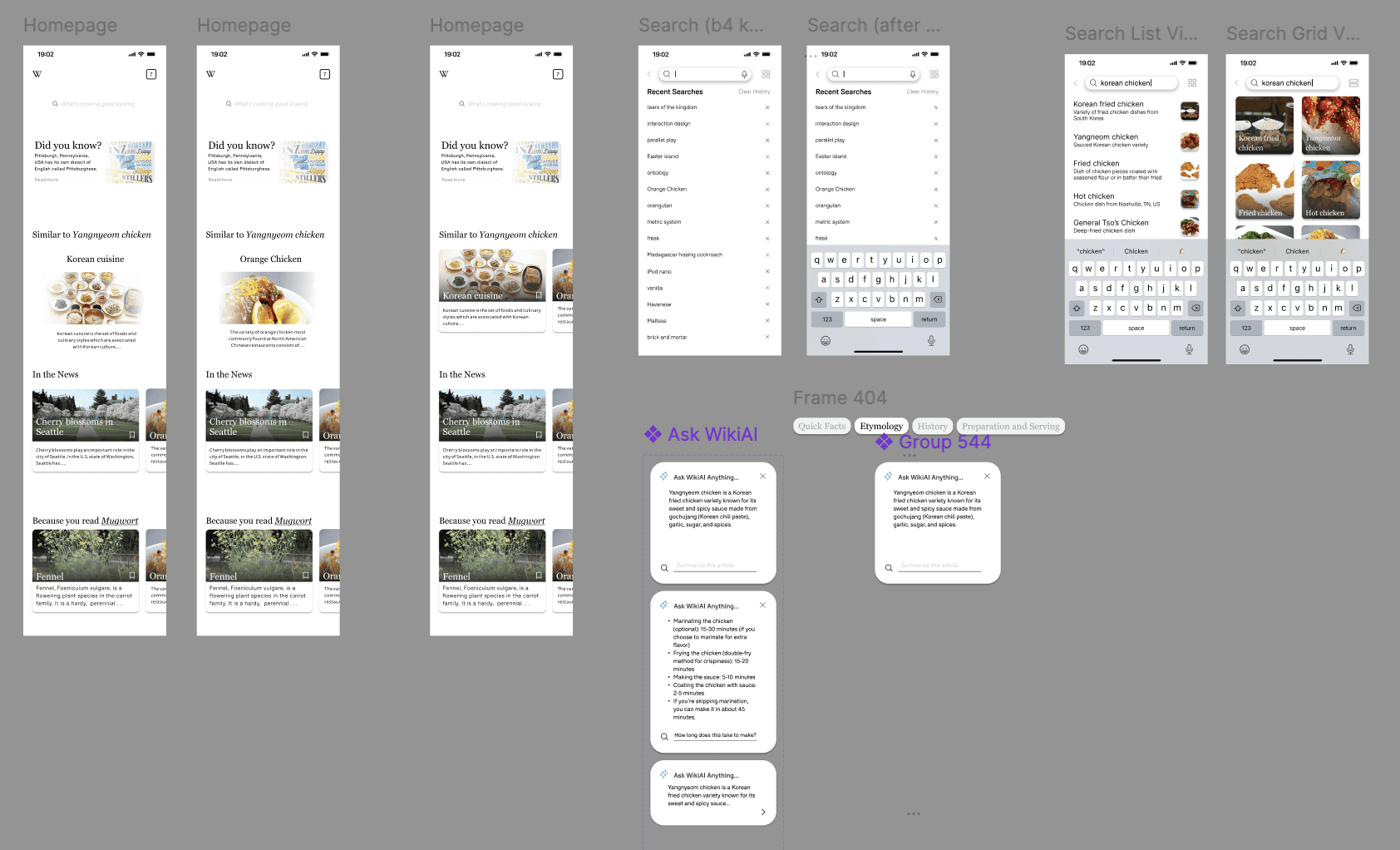
After receiving valuable feedback from our professor and many discussions amongst ourselves, our group worked on finalizing the flow, signature experiences and key features that we wanted to include in our redesign. We all worked to create shells and brainstorm how we wished to present certain features, translating our ideas into mid-fidelity wireframes to map out our experience.
After receiving valuable feedback from our professor and many discussions amongst ourselves, our group worked on finalizing the flow, signature experiences and key features that we wanted to include in our redesign. We all worked to create shells and brainstorm how we wished to present certain features, translating our ideas into mid-fidelity wireframes to map out our experience.
Iterating + Challenges
Iterating + Challenges
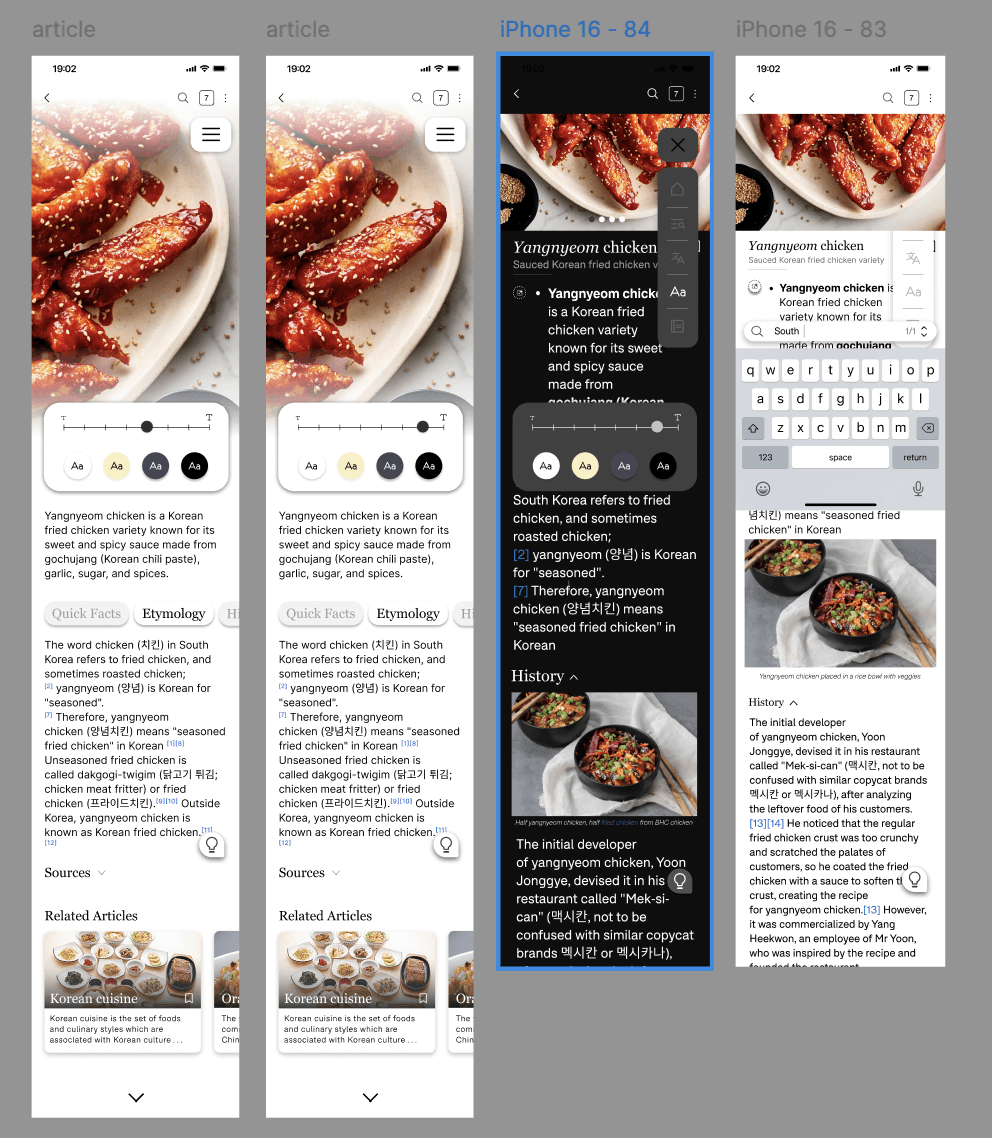
Using our pyramid and survey as benchmarks to ensure we were meeting our goals, we made thoughtful changes and additions, with a primary focus on incorporating AI assistance into the app. Our main challenge was to maintain the same design system that Wikipedia is known for; throughout each step of our process, we often questioned, "Does this feel like Wikipedia?" In the end, we successfully developed a product that achieved our goal: an enhanced Wikipedia experience.
Using our pyramid and survey as benchmarks to ensure we were meeting our goals, we made thoughtful changes and additions, with a primary focus on incorporating AI assistance into the app. Our main challenge was to maintain the same design system that Wikipedia is known for; throughout each step of our process, we often questioned, "Does this feel like Wikipedia?" In the end, we successfully developed a product that achieved our goal: an enhanced Wikipedia experience.
Finalizing Concept
After receiving valuable feedback from our professor and many discussions amongst ourselves, our group worked on finalizing the flow, signature experiences and key features that we wanted to include in our redesign. We all worked to create shells and brainstorm how we wished to present certain features, translating our ideas into mid-fidelity wireframes to map out our experience.
Iterating + Challenges
Using our pyramid and survey as benchmarks to ensure we were meeting our goals, we made thoughtful changes and additions, with a primary focus on incorporating AI assistance into the app. Our main challenge was to maintain the same design system that Wikipedia is known for; throughout each step of our process, we often questioned, "Does this feel like Wikipedia?" In the end, we successfully developed a product that achieved our goal: an enhanced Wikipedia experience.